
Beat the Heat: What Triple-Digit Temperatures Really Do to Your Car
🔥 Heat Fact
On a 100° day, the inside of a parked vehicle can reach 140–160° in less than an hour—even with the windows cracked.
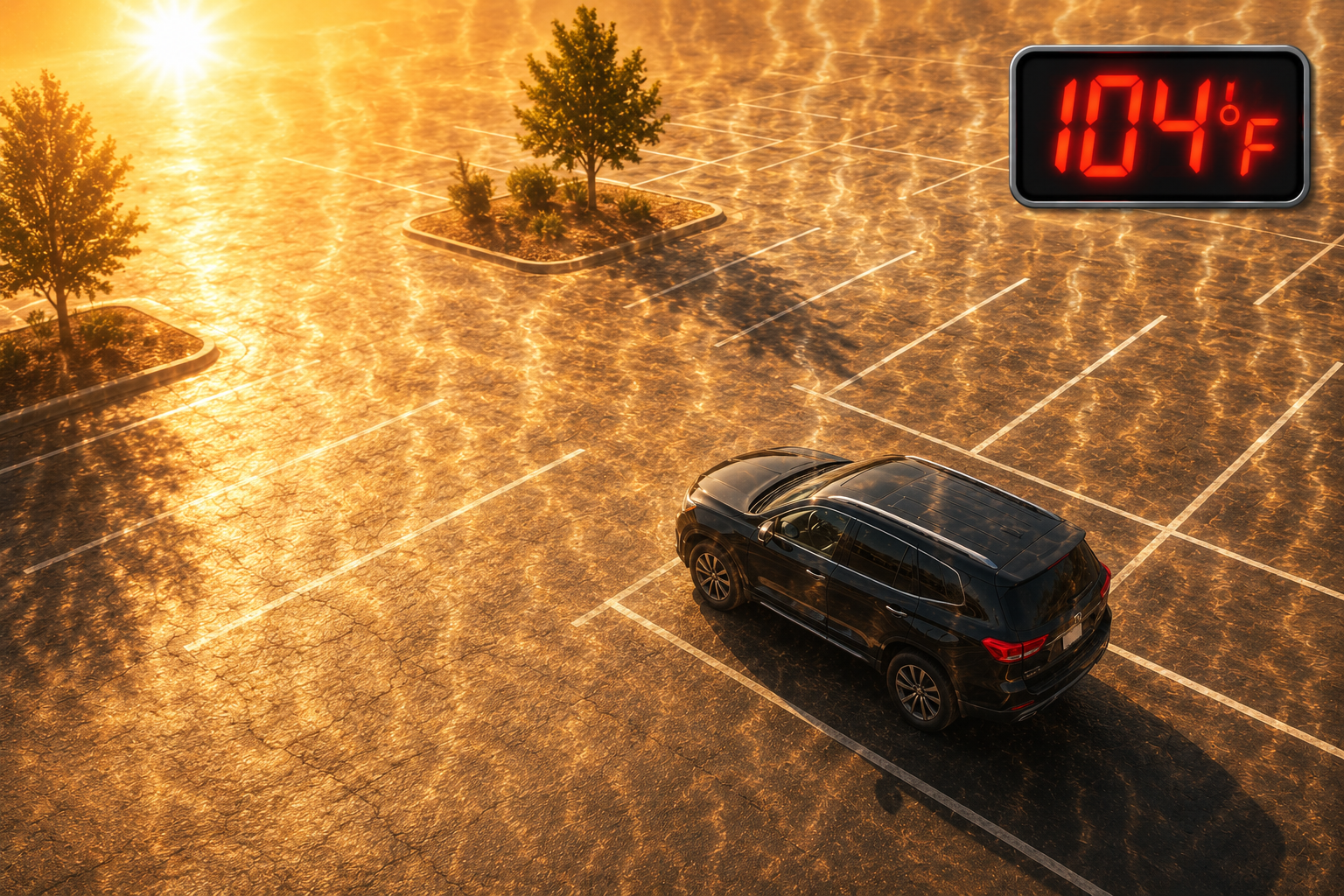
When Kansas temperatures climb into the upper 90s—or well past 100°—it's not just uncomfortable for us. Your vehicle is working harder than you probably realize.
Most drivers know to keep an eye on the coolant level, but extreme heat affects nearly every part of your vehicle. A few minutes of preventative maintenance can help you avoid a breakdown, a costly repair, or a long wait on the side of the road.
Your battery hates summer more than winter.
Dead batteries are often associated with cold weather, but excessive heat is actually the bigger enemy. High temperatures speed up chemical reactions inside the battery, causing the fluid to evaporate faster and shortening its lifespan.
Tip: If your battery is more than three years old, consider having it tested before it decides to quit on the hottest day of the year.
Your tires are under more pressure.
For every 10° change in temperature, tire pressure changes by about one PSI. Add in pavement temperatures that can exceed 140°, and your tires are taking a beating.
Underinflated tires wear faster, reduce fuel economy, and are more susceptible to blowouts.
Tip: Check your tire pressure before long trips and at least once a month. Use the pressure listed on the driver's door sticker—not the maximum pressure printed on the tire.
Your air conditioner needs a little help.
Your A/C isn't designed to cool a parked vehicle from 150° down to 70° instantly.
Tip: Roll the windows down for the first minute or two of driving to let trapped heat escape before asking the air conditioner to do all the work.
Fluids matter more than ever.
Your engine, transmission, and cooling system all rely on fluids to regulate temperature.
Low coolant or aging engine oil forces your vehicle to work even harder in extreme conditions.
Tip: If you're planning a road trip, take five minutes to check coolant, engine oil, windshield washer fluid, and brake fluid before you leave.
Don't forget what's inside your car.
A vehicle's interior can become dangerously hot—even when the outside temperature doesn't seem extreme.
Avoid leaving behind:
- Electronics
- Prescription medications
- Aerosol cans
- Plastic water bottles
- Chocolate (unless you enjoy drinking it!)
And, of course, never leave children or pets in a parked vehicle, even for a few minutes.
Build a simple summer emergency kit.
Even well-maintained vehicles can have unexpected problems.
Keep these items in your trunk:
- Bottled water
- Phone charger or power bank
- Flashlight
- Jumper cables
- Basic first-aid kit
- Small towel
- Sunscreen
- Work gloves
- Tire pressure gauge
Hopefully you'll never need them—but you'll be glad they're there if you do.
Stay Cool. Stay Safe.
Kansas summers are made for lake days, road trips, baseball games, and backyard barbecues—not unexpected breakdowns.
A little preventative maintenance now can help keep your family safe, comfortable, and on the road all season long.